
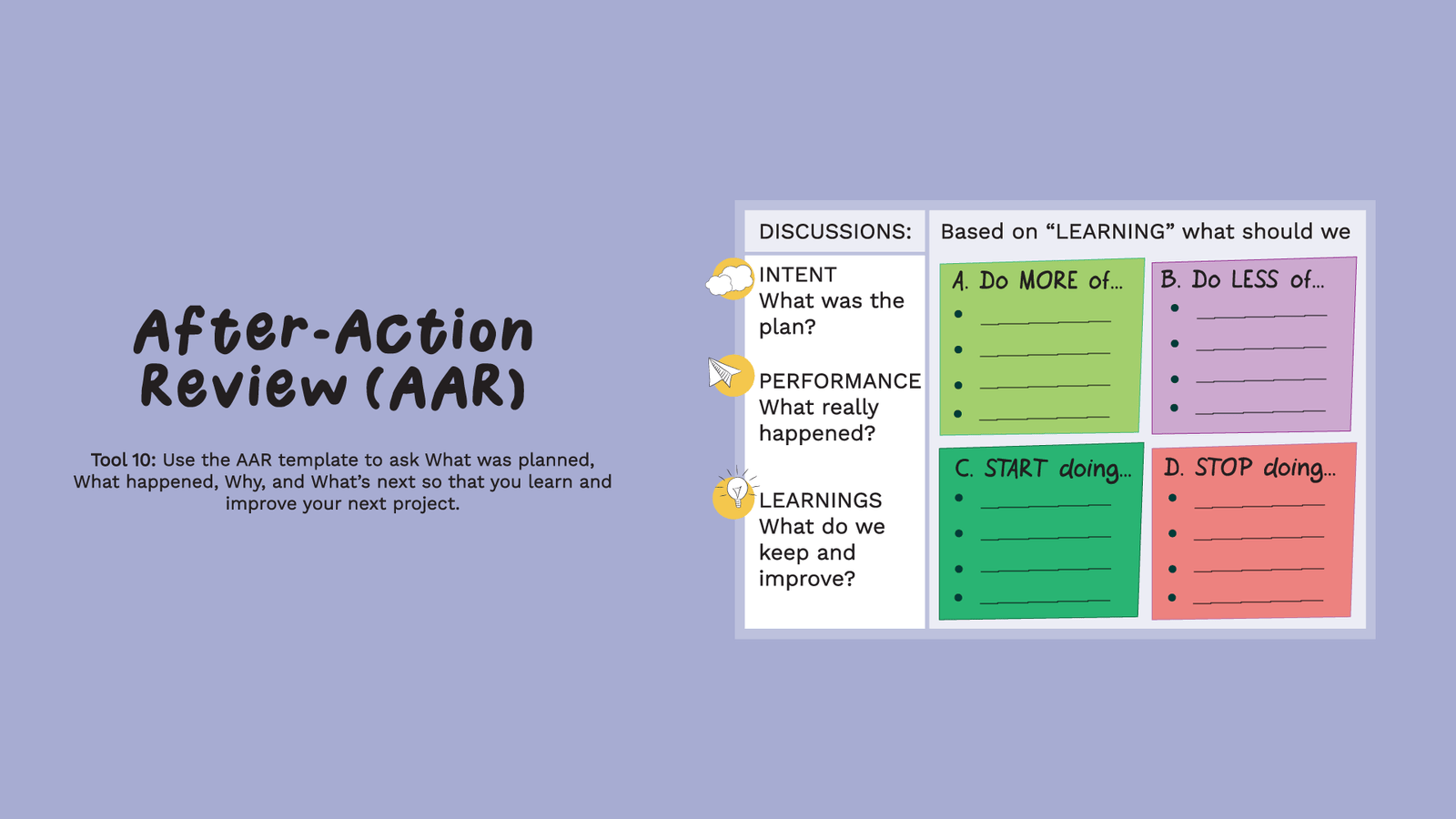
After-Action Review: The Habit of Pausing That Changes How You Grow
Most of us are very good at moving on.
We finish a project. We submit the assignment. We close the quarter. We survive the event, the exam, the deadline, the presentation.
And then we rush forward – to the next task, the next goal, the next pressure point.
What we often skip is the most valuable part: reflection.
Not overthinking.
Not self-criticism.
Just a short, structured pause to ask: What actually happened here?
That pause is the essence of the After-Action Review (AAR) — a deceptively simple tool that quietly builds stronger teams, sharper professionals, and more intentional individuals.
What Is an After-Action Review (AAR)?
An AAR is a short, structured reflection conducted after an activity, project, or experience – successful or not.
At its core, it asks four questions:
- What was supposed to happen?
- What actually happened?
- Why was there a difference?
- What will we do differently next time?
That’s it.
No blame. No long reports. No perfection required.
Just learning – captured while it’s still fresh.
Why AAR Matters at Work (and Beyond)
In workplaces around the world, teams repeat the same mistakes not because they don’t care – but because they never slow down enough to learn.
AAR helps turn experience into insight.
In professional settings
- Teams improve project execution
- Managers strengthen planning and delegation
- Recruitment cycles get smarter, not just faster
- Communication gaps become visible
- “What went wrong?” becomes “What did we learn?”
Over time, this builds a learning culture, not a reactive one.
In personal life and goal-setting
AAR works just as powerfully after:
- a failed habit attempt
- an exam or course
- a busy month that felt unproductive
- a difficult conversation
- a personal project that didn’t go as planned
Instead of saying “I’m bad at this”, AAR gently reframes the question to:
“What can I adjust next time?”
That shift changes everything.
The Quiet Power of Looking Back Once
One of the most common reflections people share after using AAR consistently is this:
“I stopped making the same mistake twice.”
Not because they became perfect — but because they became aware.
AAR doesn’t demand big changes.
It encourages small, intelligent adjustments.
And small adjustments compound.
When Should You Use an AAR?
📌 After completing a project or task
📌 After an event, training, or workshop
📌 At the end of a quarter or year
📌 After missing a goal
📌 After achieving a goal (this is often overlooked)
📌 After a personal routine breaks down
If something mattered enough to do — it’s worth five minutes of reflection.
How to Do an AAR (Simple)
You can do this alone, with a partner, or as a team.
Step 1: Set the intention
This is about learning, not judging.
Step 2: Ask the four questions
Write short, honest answers.
Step 3: Identify 1–2 changes only
Don’t overload yourself. Focus on what’s realistic.
Step 4: Capture the insight
A note, a doc, a shared board – anywhere you’ll revisit it.
AAR as an Organizational Skill: Not Just a Tool
People who use AAR regularly tend to:
- plan better
- communicate more clearly
- adapt faster
- set more realistic goals
- feel more in control of their progress
Because they are not just doing, they are learning while doing. That’s a powerful professional and personal advantage.
Final Thought: Growth Isn’t Only Forward
We often think growth means pushing ahead.
But sometimes, growth comes from a brief look back – done with honesty, kindness, and curiosity.
The After-Action Review reminds us that every experience carries value, if we choose to extract it. Whether you’re building stronger teams or clearer personal goals, reflection is the missing link between effort and progress.
Pro-edge supports organizations and individuals in turning experience into structured learning – so improvement becomes intentional, not accidental. Visit Recruitment Management Service
to learn more!



Leave A Comment