
The Johari Window: Why Self-Awareness Is a Skill, Not a Personality Trait
At some point in our lives, most of us hear feedback that surprises us.
“You’re very quiet in meetings.”
“You come across as confident.”
“I didn’t know you felt that way.”
And internally, we think:
Really? That’s not how I see myself at all.
This gap between how we see ourselves and how others experience us is not a flaw. It’s human. And it shows up everywhere – in meetings, friendships, leadership roles, and even personal goal-setting. The Johari Window exists precisely for this reason.
Not to label people. Not to analyze personalities.
But to help us understand what’s visible, what’s hidden, and what’s still unknown – to ourselves and to others.
What Is the Johari Window (in Simple Terms)?
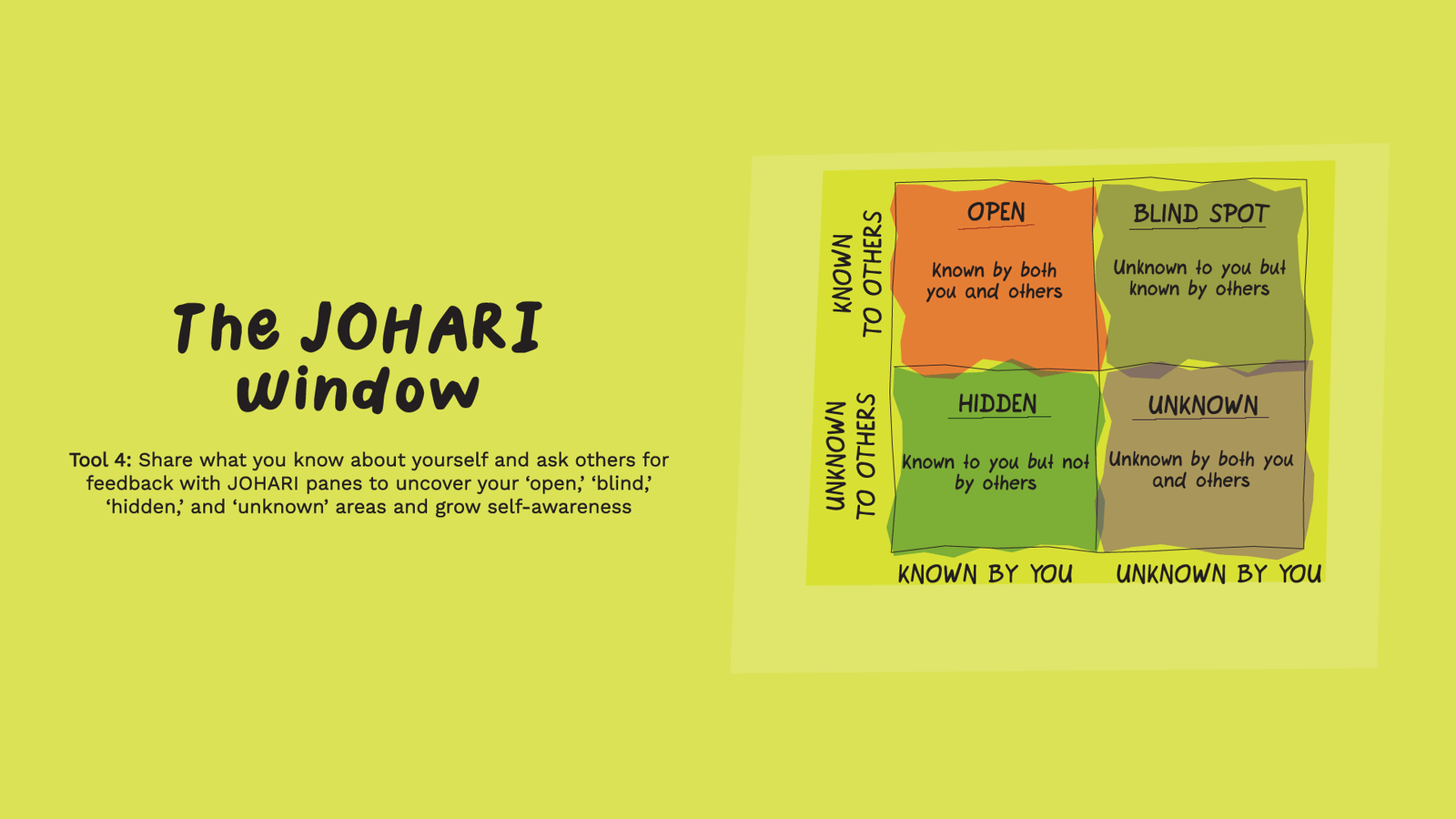
The Johari Window is a framework that divides self-awareness into four areas:
- Open Area
What you know about yourself and others know about you.
Example: your role, skills, strengths you openly share. - Blind Area
What others see in you, but you don’t see in yourself.
Example: how your tone sounds, how you react under pressure. - Hidden Area
What you know about yourself but choose not to share.
Example: fears, ambitions, insecurities, private motivations. - Unknown Area
What neither you nor others know yet.
Example: untapped potential, reactions in new situations.
The goal isn’t to eliminate any box. The goal is to expand the Open Area – slowly, safely, and intentionally.
Why This Tool Matters at Work
In workplaces around the world, miscommunication rarely happens because people are incompetent. It happens because people are unaware.
The Johari Window helps teams:
- give and receive feedback with less defensiveness
- understand different communication styles
- reduce misunderstandings before they escalate
- build trust without oversharing
When teams use this tool well, feedback stops feeling personal and starts feeling useful.
Managers learn how they’re perceived.
Team members feel seen without being exposed.
Collaboration becomes clearer, calmer, and more effective.
Why It Also Matters in Personal Goal-Setting
The Johari Window isn’t just a workplace tool.
It’s quietly powerful for personal growth – especially at transition points in life.
Think about moments like:
- starting a new role
- changing careers
- stepping into leadership
- returning to work after a break
- setting goals for a new year or phase of life
Often, we set goals based only on the Open and Hidden areas – what we think we know about ourselves.
But growth often lives in the Blind and Unknown spaces.
Questions the Johari Window gently invites you to ask:
- What patterns do others notice in me?
- What feedback do I usually dismiss too quickly?
- What strengths might I be underestimating?
- What situations bring out a different version of me?
Self-awareness doesn’t limit you.
It gives your goals a more honest foundation.
When Is the Johari Window Most Useful?
- During feedback or performance conversations
- In team-building or leadership development sessions
- When you feel “stuck” but can’t name why
- When goals feel right on paper but hard to sustain
- When communication keeps going slightly wrong
You don’t need to use it constantly.
You need to use it thoughtfully.
How to Use the Johari Window (Practically)
- Start with reflection
What do you believe are your strengths, challenges, and preferences? - Invite selective feedback
Ask a few trusted people specific questions. Not “What do you think of me?” but
“How do I come across in meetings?”
“What should I do more or less of?” - Notice patterns, not one-off comments
Patterns point to blind spots. - Choose what to share
Expanding the Open Area doesn’t mean oversharing. It means sharing usefully. - Revisit over time
Self-awareness evolves as your roles and life stages change.
A Final Thought
The Johari Window doesn’t promise instant transformation.
What it offers is something quieter and more sustainable: clarity.
Clarity about how you show up.
Clarity about how others experience you.
Clarity that makes better communication, better goals, and better relationships possible.
And often, that clarity is the missing piece people have been working around for years.If you’re building a team or shaping your own growth, start with understanding – not assumptions.
Pro-edge supports organizations and individuals in developing self-awareness, feedback cultures, and communication skills that actually work in real life.



Leave A Comment